Introduction
Homeowners in Morristown, NJ rely on a smoothly operating garage door every day. When something goes wrong, quick troubleshooting can save time and prevent a small problem from becoming an expensive repair. This guide focuses on practical steps you can take for common garage door repair problems, how weather in NJ affects components, and when to call a qualified technician.
Quick Safety Checks Before Troubleshooting
Always prioritize safety. A broken spring, frayed cable or a malfunctioning opener can cause serious injury. Before you touch any hardware:
- Disconnect power to the opener at the wall and unplug it if possible.
- Keep children and pets clear of the garage opening.
- Never attempt spring replacement or high-tension cable work—these require professional garage door repair tools and training.
Common Problems and How to Troubleshoot
1. Door Won’t Open or Close
Symptom: The opener motor hums but the door doesn’t move, or the door reverses before closing.
- Check the remote and wall switch batteries and try a hard reset of the opener by unplugging it for 60 seconds.
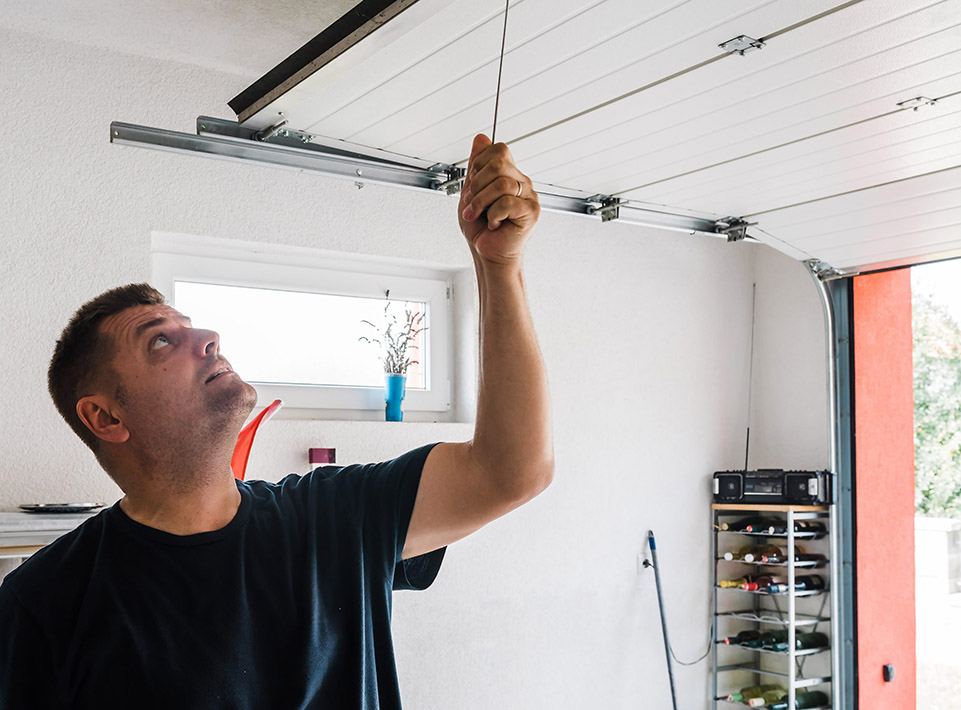
- Inspect the photo-eye sensors at the bottom of the tracks for dirt or misalignment; clean the lenses and realign if needed.
- Look for obstructions in the track or damaged rollers—remove debris and visually inspect rollers for flat spots.
If the motor runs and the door still won’t move, the issue may be a broken torsion spring or a snapped cable. These are high-risk items; contact a professional garage door repair technician.
2. Loud Noises or Grinding
Symptom: New squeaks, grinding, or banging when the door cycles.
- Lubricate rollers, hinges, and the torsion spring (a light, high-quality garage door lubricant works best).
- Check for loose bolts on brackets and hinges—tighten with appropriate tools, but don’t overtighten.
- Worn rollers or damaged bearings often cause grinding sounds; replace rollers as needed for a quieter operation.
3. Door Is Off-Track or Uneven
Symptom: One side of the door appears higher than the other or the door binds on the track.
- Do not force the door to close. Forcing can bend tracks and worsen damage.
- Inspect the roller path and remove objects; if the track is bent or rollers are popped out, schedule service immediately.
Realignment and track repair are typical tasks for professional garage door repair crews, who have the tools to safely reset track alignment and restore smooth operation.
4. Remote or Keypad Not Working
Symptom: Remote control fails to activate the opener or the keypad is unresponsive.
- Replace batteries in remotes and keypads first. Weak batteries are the most common cause.
- Reprogram the remote to the opener following the manufacturer instructions—these steps vary by model.
- If interference is suspected, test the remote from different spots around your property to see whether range or positioning is the issue.
Weather-Related Issues in Morristown, NJ
Seasonal weather affects garage doors. Cold winters make metals contract and lubricants thicken; humid springs can accelerate rust. Typical impacts include:
- Stiff rollers or frozen tracks in sub-freezing temperatures—clear snow and ice, and use a silicone-based lubricant on moving parts.
- Warping or swelling of wooden doors during humid months—inspect weatherstripping and maintain finish coatings to prevent moisture intrusion.
- Salt and road spray in winter can corrode exposed hardware—regular cleaning and lubrication minimize corrosion problems.
Routine seasonal maintenance reduces the number of emergency garage door repair calls and extends the life of hardware.
Maintenance Checklist for Homeowners
Follow a simple checklist every 3–6 months to spot potential failures early.
- Visual inspection of springs, cables, rollers, and tracks for wear or damage.
- Test auto-reverse by placing a block in the door’s path—door should reverse on contact.
- Lubricate rollers, hinges, lock barrels, and springs with appropriate lubricants.
- Test opener safety sensors for alignment and cleanliness.
For more DIY tips and seasonal reminders, see our blog for local guidance and quick fixes specific to Morristown homes.
When to Call a Professional
Some repairs are best left to trained technicians. Call professional garage door repair if you see any of these:
- Broken torsion or extension springs.
- Frayed or snapped cables.
- Severely bent tracks or a door that has come off its track.
- Opener motor failure or complex electronic issues.
Licensed teams bring safety gear, replacement springs, and calibrated tools. If you’re unsure, review our list of common services and decide on the level of help you need at https://garagedoors-morristown.com/services.
Costs, Timelines, and Permits in NJ
Homeowners often ask how long repairs take and what they might cost in Morristown, NJ.
- Minor repairs like new rollers, sensor alignment, or lubrication often take 30–90 minutes and are relatively inexpensive.
- Spring replacement is more complex and typically requires 1–2 hours plus the cost of parts; torsion springs are priced by weight and length.
- Full door replacement or major track repair may take a day and may require a permit depending on local building codes—check with the town or your contractor if structural changes are involved.
Many residential service providers include estimates on-site or by phone. For tailored advice and scheduling, contact our local team through the website https://garagedoors-morristown.com/contact.
Preparing for a Service Visit
To get the most from a repair visit:
- Clear the area around the door and provide safe access to the opener and tracks.
- Note any noises, the first time the issue occurred, and weather conditions when the problem started.
- Have your door type (steel, wood, insulated) and opener brand/model ready, if known.
Good preparation speeds diagnosis and helps technicians bring appropriate parts, reducing return visits.
Conclusion
Routine checks and prompt attention to warning signs keep your garage doors functioning and secure. Simple fixes often resolve common issues, but high-tension components and structural problems require professional garage door repair to protect your property and family. Use the seasonal checklist, follow safe practices, and reach out for service when problems fall outside basic troubleshooting.
Frequently Asked Questions
Q: Does Morristown require permits for garage door replacement?
A: Minor repairs rarely require a permit, but full door replacement that alters structural openings may. Check with the Town of Morristown building department or ask your contractor to confirm required permits before work begins.
Q: How does cold NJ weather affect spring life?
A: Cold temperatures make lubricants thicker and metal slightly less flexible, which can reveal worn springs. Regular inspection and lubrication in fall help reduce winter failures.
Q: How long does a typical spring replacement take in a residential service call?
A: Most residential spring replacements take 1–2 hours, depending on access and whether the technician needs to order a custom-size spring. Ask for on-site estimates to confirm timing.
Q: Will a new opener improve an older garage door’s performance?
A: A new opener can improve smoothness and add safety features, but worn springs, rollers, and tracks should be addressed first. Technicians often recommend pairing mechanical repairs with an updated opener for best results.
Q: Are warranties common on parts and labor?
A: Many reputable local companies offer limited warranties on parts and labor; check specifics—spring warranties, manufacturer opener warranties, and labor guarantees vary by provider.
Helpful local resources in Morristown, NJ
- Garage Door Repair Hoboken
- Garage Door Repair Montclair
- Garage Door Repair Westfield
- Garage Door Repair Summit
- Garage Door Repair Maplewood
- Garage Door Repair Livingston
- Garage Door Repair Short Hills
- Garage Door Repair Princeton
- Garage Door Repair Red Bank
- Garage Door Repair Morristown
- Garage Door Repair Chatham
- Garage Door Repair Mendham
- Garage Door Repair Bernardsville
- Garage Door Repair Bedminster
- Garage Door Repair Clinton
- Garage Door Repair Tenafly
- Garage Door Repair Ridgewood
- Garage Door Repair Upper Saddle River
- Garage Door Repair Wyckoff
- Garage Door Repair Basking Ridge
- Garage Door Repair South Orange
- Garage Door Repair Teaneck
- Garage Door Repair Fort Lee
- Garage Door Repair East Brunswick
- Garage Door Repair Montvale
- Garage Door Repair Haddonfield
- Garage Door Repair Marlboro
- Garage Door Repair Cranford
- Garage Door Repair Voorhees
- Garage Door Repair North Caldwell